What Happens When Technology Looks Like Fashion?
Written by Anita Loughlin
At first glance, the newest launch and collaboration of Meta’s AI glasses with Kylie Jenner looks like an ordinary pair of sunglasses. Costing less than an iPhone, starting at $399, they can be styled easily in any way and worn casually out in public.

But the subtlety of a camera behind this trendy looking frame raises the question that feels increasingly impossible to ignore: What happens when technology looks fashionable?
In Barrett Pall’s substack article titled, The Nefarious Launch of Meta Glasses X Kylie Jenner, Pall argues that Meta’s strategy is to make the technological aspect of the glasses disappear, describing the accessory as a camouflage of a camera.
Pall has witnessed these glasses doing more harm than good through his professional coaching, saying he despises these glasses “because they take away one of the biggest things I advocate for: consent,” said Pall.
Meta CEO Mark Zuckerberg has presented this product differently. In a video shared by Yahoo Finance’s official TikTok page, Zuckerberg shares his partnership with Kylie Jenner, emphasizing that the glasses “look really good” and calling her a “fashion icon.”
For Dennis Mendoza, a Plumber based in Massachusetts and childhood classmate of mine, he shared that the glasses’ appearance played a part in the appeal.

Mendoza owns a pair of the Oakley Vanguard Meta glasses and said the glasses’ “futuristic cool style” initially attracted him along with celebrity influence playing a role in his purchase.
“For me, Kylian Mbappe’dad introduced them to me and I liked how they looked. I probably wouldn’t be as interested if they looked more like technology than style influenced,” Mendoza said.
Kylian Mbappe’dad for Oakley Vanguard Meta glasses campaign on the right
Meta is not the only company approaching intelligent eyewear this way. Google has entered the eyewear space similarly by working with the fashion eyewear brand Gentle Monster.
The collaboration features notable and recognizable fashion figures, such as Alex Consani and Anok Yai, that appeal to younger generations.
Ella Devi, a popular fashion commentator on TikTok, said that these collaborations represent an “intentional push” to market intelligent eyewear to a younger, more fashion conscious audience.
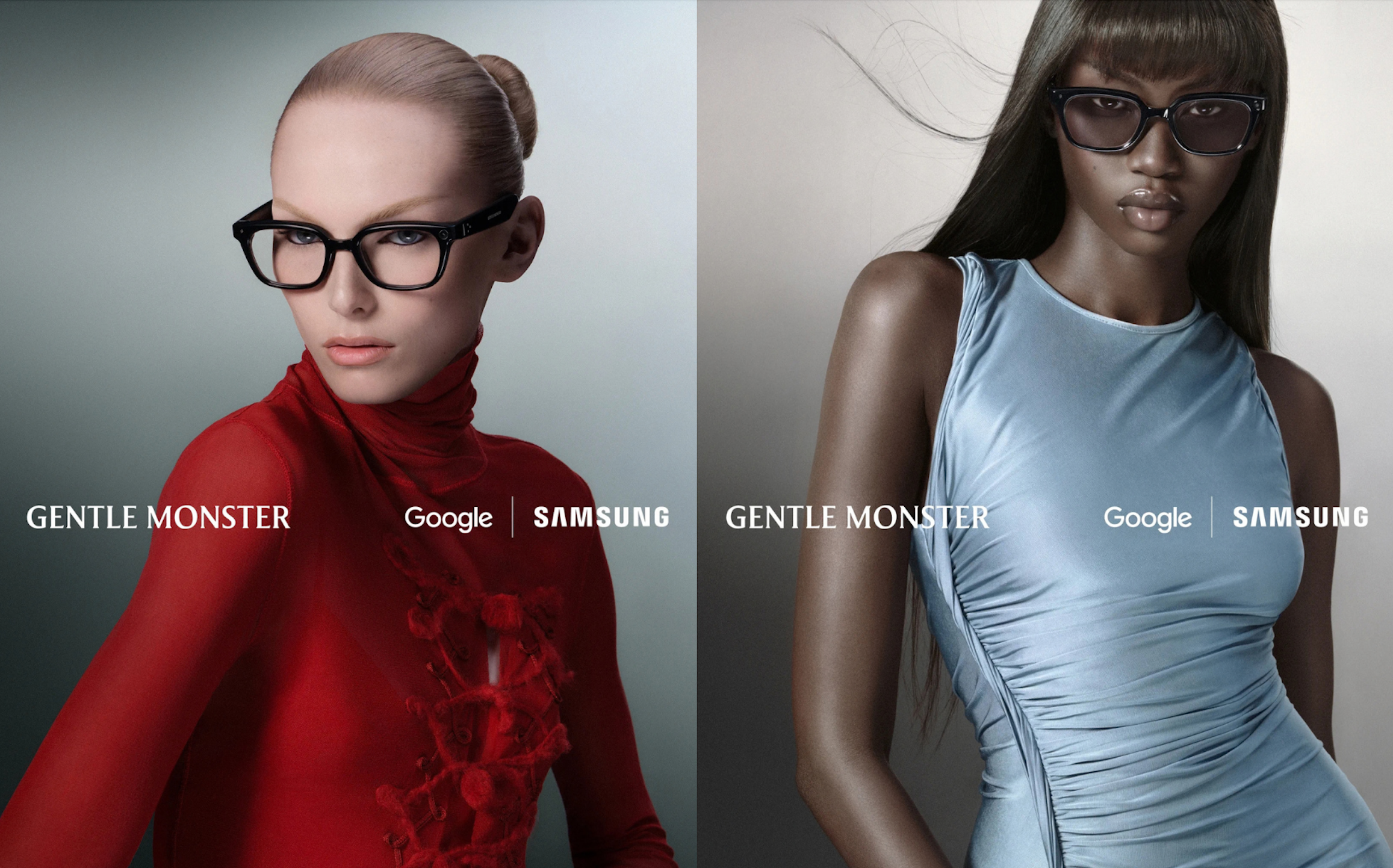
Alex Consani and Anok Yai for Gentle Monster x Google and Samsung
“Google partnering with Gentle Monster and Meta partnering with Kylie Jenner to make surveillance glasses is no accident. They are trying to expand their customer base to young women…” said Devi.
Whether or not this is the correct interpretation, the strategy in which these glasses are being marketed is hard to miss.
With the glasses now more accessible in price, why is there a sudden push to bring these products into everyday fashion?

Devi said, “Meta partnering with one of the most famous influencers in the world, Kylie Jenner, also speaks to the larger push under capitalism for young women to turn their whole lives into content for monetization and social reward.
“These companies know that the buying power of young women is strong, and they want to tap into that,” Devi added.
Anti-Meta billboard in London on left
At the same time, Devi acknowledges that with the current reputation of these glasses being perceived as “pervert glasses” as she calls them, may make this strategy more difficult among young consumers who are concerned with the invasion of privacy surrounding these wearable cameras.
Mendoza had a different perspective, sharing the positive sides of the glasses,“I would say the glasses increase your abilities to perform more... If I have to make a phone call I can just ask Meta to call, and I can use them as headphones to play music,” he said.
He then shares an audio recording directly from the glasses, “I'm at a concert right now and I'm using them just to fit the outfit but also to record videos of the show so I don't have to pull my phone out.”
Although most users of the glasses don’t have malicious intentions while using them, many of the interactions that can happen between the wearers and the unsuspecting people being captured are raising concerns about privacy and consent.
It’s hard to tell what someone may be recording with the glasses on compared to when someone is using a phone or physical camera to record. We’ve all seen these “harmless pranks” being posted online by the users of these glasses, and the fault lies within them not resembling a camera in the slightest.
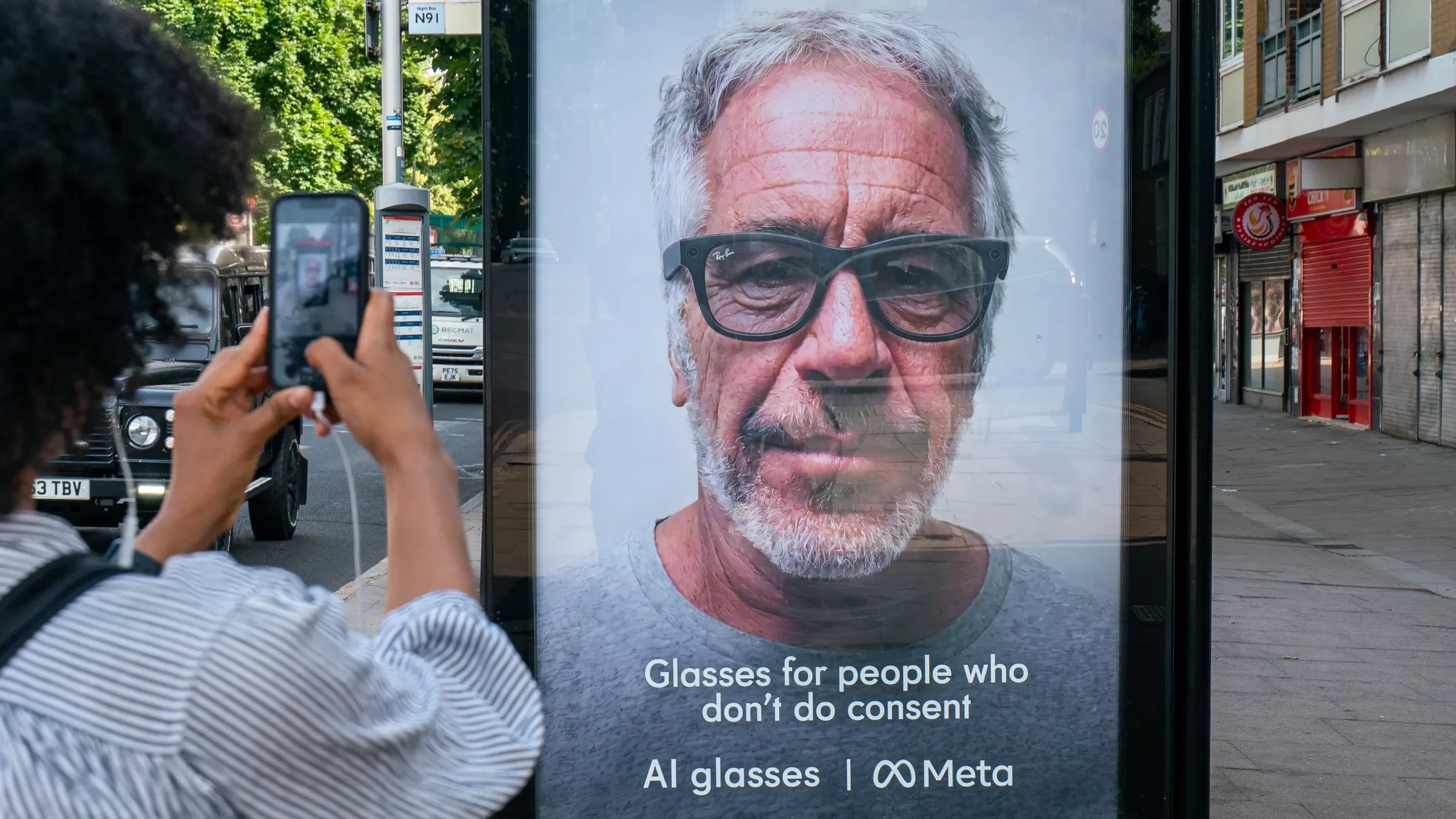
Epstein Anti-Meta ad on Carnegie Street, London, July 2026
According to The Guardian article titled ‘I’m not spying’: how Meta’s smartglasses have divided opinion written by Nicola Slawson and Rosie Peters-McDonald Kiki, Kiki from the West Midlands in the UK, said “I saw someone wearing them in a cafe and just moved away because I felt uncomfortable.”
“When someone’s just looking at you through their glasses, it worries me,” said Kiki. “I imagine taking images secretly is far easier [than on phones]. You could just pretend to adjust your hair or cap, and press the button in a passing gesture,” Kiki added.
Earlier this March, an investigation by Swedish Newspapers Svenska Dagbladet and Göteborgs-Posten reported that the footage captured by Meta’s glasses included “sensitive and personal” moments that have been reviewed by contracted data annotators at a Kenya-based company called Sama.
The data annotators review the footage captured by the glasses and label the footage to help AI systems get better at identifying what they see.
Gizmondo reported that the investigation of the footage included people using the bathroom, getting dressed, and other private moments in which one was not aware they were being recorded.
Meta later ended its partnership with Sama according to Svenska Dagbladet.
This controversy raises even more concern about privacy and consent. Pall argues that the concern lies within how discreetly a recording camera can be worn,“Anyone anywhere can record you, pump out content for their platform, and you can’t do anything about it,” he said.
However, Mendoza questions where the line falls between convenience and privacy, “I feel like it's convenient because… it's basically an on-demand feature.
“But who's to say they’re [Meta] not always watching, even when you turn off the recording. I think ultimately it isn't even up to the user,” Mendoza added.
